

Ask a lawyer, a journalist, or a small business owner how they'd find a specific Government Order issued three years ago by a state department, and most will describe the same workaround: call someone who might know, dig through a departmental website that wasn't built for search, or file an RTI and wait. The order exists. It was published. It simply was never made findable.
That gap — between a document being public and a document being searchable — is what the Central Digital Repository (CDR) on Digital Uttarakhand was built to close.
A published document that can't be found is functionally the same as one that was never released.
What the CDR actually is
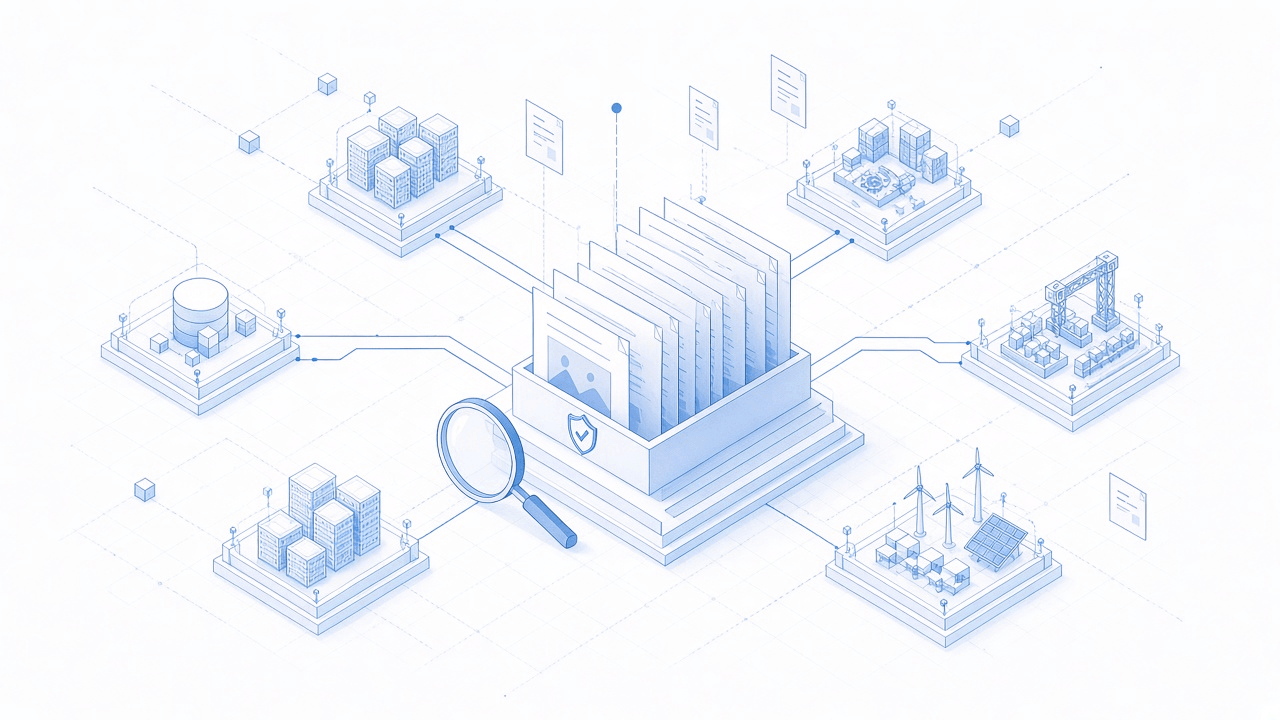
The CDR is not a citizen services form or an application tracker — those already exist elsewhere on the platform. It is a verified government records search engine: a single, authenticated index of Acts, Rules, Regulations, Government Orders (G.O.s), Notifications, Circulars, and Policies issued across every department of the Uttarakhand government, built for digital.uk.gov.in.
Four things define how it works:
01
Instant search and retrieval
A keyword, department, or date brings back the exact document — not a list of departmental homepages to search through manually.
02
Verified official records
Every document is sourced and authenticated at the department level — the legal original, not a forwarded copy of unknown provenance.
03
One platform, every department
Acts, Rules, G.O.s, Notifications, Circulars, and Policies from across departments sit behind a single interface.
04
24/7 public availability
No office hours, no in-person request, no waiting for a department to respond — open to citizens, businesses, researchers, and officials.
Who actually needs this
The CDR's users are not a single audience with one need — they overlap, but the reason each group opens it is different:
01
Citizens
Confirm which rule or notification applies to their situation, without translating legal language through a middleman.
02
Businesses
Check regulatory compliance — confirming that a policy or circular they are acting on is current, not superseded.
03
Researchers and journalists
Trace how a policy evolved across amendments, G.O.s, and circulars over time.
04
Government officials
Cite the correct order in a file, instead of relying on institutional memory or a personal archive of PDFs.
Each of these is, at its core, a document transparency problem — and each was previously solved (if it was solved at all) by informal channels rather than a system.
Why "verified" matters as much as "searchable"
Search alone isn't the hard part — a general web search will often surface a copy of a Government Order somewhere. What it won't confirm is whether that copy is current, authentic, or superseded by a later amendment. That distinction is the actual value of a centralized government document repository over an open web search: every record in the CDR carries its department, issue date, and category, so a result is traceable back to its source rather than trusted on faith.
That same principle sits behind India Code at the national level — a searchable repository of central and state enactments — and behind the OECD's framing of open government data: publication without discoverability and authenticity is not transparency.
Findability without verification just moves the trust problem downstream — to whoever finds the document next.
Part of a larger shift, not an isolated tool
The CDR sits inside Digital Uttarakhand's broader "One State, One Portal" model — the same single sign-on that gives citizens access to Apuni Sarkar and gives officials access to IFMS, eOffice, Unnati, and the CM Helpline. Housing the state's legal and policy document repository inside that same platform, rather than as a standalone microsite, means a person already inside the ecosystem for one reason doesn't have to leave it to look up a G.O. for another.
That design choice reflects a broader trend across Indian e-governance and digital transparency portals: the shift from digitizing individual documents to digitizing discovery itself — making the sum of a government's public records behave like one searchable system rather than a hundred disconnected archives. The United Nations E-Government Survey 2024 measures maturity by whether people can actually find and use what government publishes — not by how many PDFs exist on departmental sites.
A model other states are only now catching up to
This shift isn't hypothetical — it's happening in real time elsewhere. In June 2026, Haryana announced its own centralized digital repository initiative, directing every department to prepare digitised versions of state Acts, rules, executive orders, circulars, and policies for a single searchable platform, with documents organised by sector, subject, and revision date. Rajasthan's High Court has separately pointed litigants and advocates to a comparable one-place portal for state enactments and notifications.
The direction of travel across states is the same: legal and policy documents stop being department-owned PDFs and start being a searchable public record, indexed by department, date, and category rather than by which office happened to publish them. Uttarakhand's CDR isn't reacting to this trend — it's already live, which is the more useful position to be in when other states are still issuing the instructions to begin digitising.