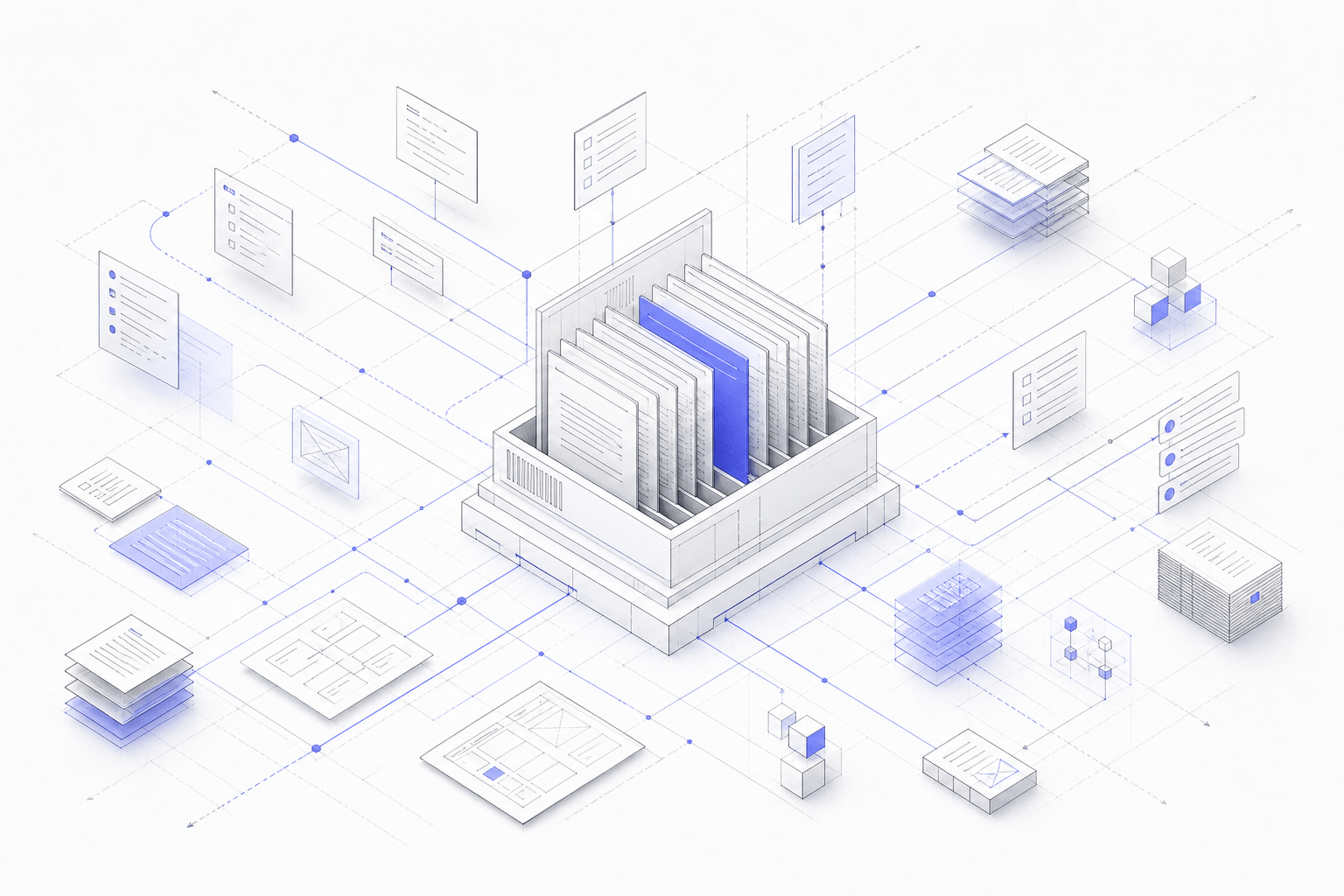

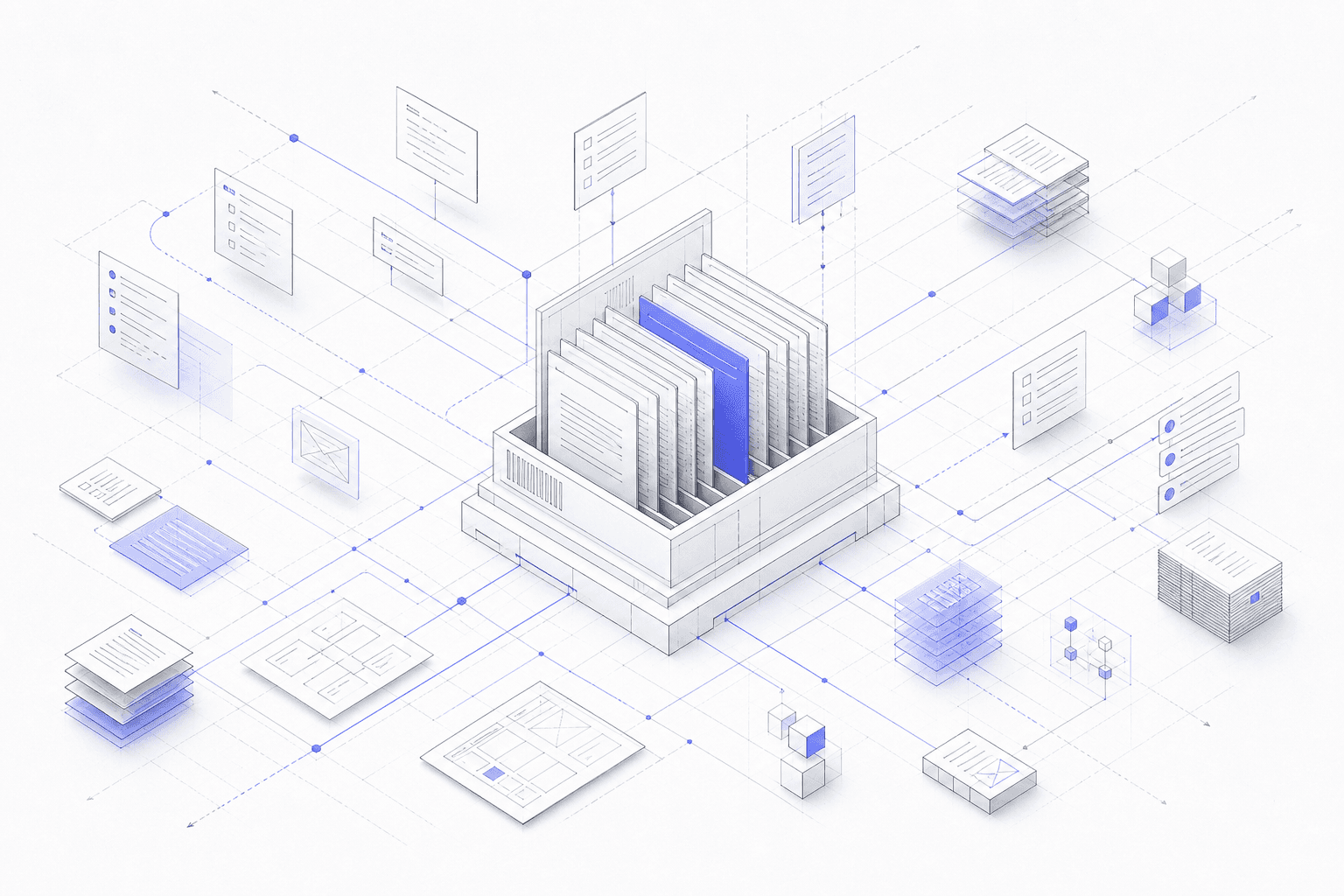


A Business Analyst's day rarely looks the way job descriptions promise. It looks like a browser with fifteen tabs open, a WhatsApp thread with the client, an inbox full of "final_v2" attachments, and a calendar packed with meetings that each produce their own trail of notes. Multiply that across a few months on a project, and what started as a handful of documents turns into a maze nobody can navigate — not even the person who built it.
The problem is rarely that the information doesn't exist. It's that nobody can find it when it matters.
Where the chaos actually comes from
Every project generates the same categories of output: Minutes of Meetings, Functional Requirement Specifications, System Requirement Specifications, Business Requirement Documents, wireframes, change logs, sign-off emails. Individually, each of these is manageable. The trouble starts when they pile up without a shared structure.
Multiple stakeholders
Every client contact, department head, and vendor has their own version of “the requirement,” shared in their own format, at their own time.
Multiple documents
MoMs, FRS, SRS, BRDs, and their revisions accumulate fast — often in different tools with no link between them.
Multiple meetings
Each discussion produces its own notes and decisions, many of which quietly override something written weeks earlier.
None of this is a communication failure on its own. It's what happens by default when documentation has no home. A month in, nobody can say with confidence which version of the FRS is current, which MoM captured the final decision on a disputed requirement, or whether a client's verbal confirmation in a call ever made it into a document at all.
Structure is not bureaucracy — it's memory
The instinct when things get messy is often to add more process — more approvals, more review cycles, more people copied on email. That usually makes things slower without making them clearer.
The simpler fix is closer to information architecture than process design: a folder structure that mirrors how a project actually thinks.
One folder, one purpose
A dedicated home for MoMs, another for FRS, another for SRS, another for sign-offs. No mixing.
Version discipline
Every document dated and versioned the same way, so “latest” is never a guess.
Traceable decisions
MoMs link back to the requirement they affect, so context is never lost weeks later.
A structure this simple is easy to dismiss as too obvious to matter. In practice, it's the difference between a BA who can answer "why was this requirement changed?" in ten seconds, and one who has to reopen a dozen files and reconstruct a timeline from memory.
A good folder structure doesn't organize documents. It organizes decisions.
What a working structure looks like
There's no single correct hierarchy, but a structure that tends to survive contact with a real project usually separates documents by type first, timeline second. A typical top level might look like:
Every meeting, dated, with action items and decisions clearly separated from discussion.
Living documents with a visible version history — not a folder of “final,” “final_final,” and “final_v3.”
The anchor document that every requirement can be traced back to.
Anything that alters an agreed requirement, with the reasoning attached.
Approvals and confirmations, kept separately so they are never buried inside a longer document.
The specific labels matter less than the discipline behind them. What matters is that anyone joining the project midway — a new BA, a developer, a QA lead — can open the folder and understand the state of the project without a single meeting.
The real payoff isn't tidiness
A structured folder doesn't just look organized. It changes how a BA works day to day.
Search time — minutes, not meetings
Instead of pinging three people for “that document from last month,” the answer is one click away.
Onboarding — hours, not weeks
A new team member can understand project history from the folder itself, without a large handover session.
Audits and disputes — evidence, not memory
When a stakeholder disputes a requirement, the MoM and sign-off trail settle it without argument.
This compounds over the life of a project. Early on, the difference between a structured and an unstructured project feels cosmetic. Six months in, it's the difference between a team that can move fast because history is a click away, and one that re-litigates old decisions because nobody can prove what was actually agreed.
Good documentation isn't about writing more. It's about making sure what's already been decided never has to be decided twice.
For a Business Analyst, the folder structure is not an administrative afterthought — it's the closest thing a project has to institutional memory. Get it right early, and it quietly does its job in the background for the rest of the project. Get it wrong, and every stakeholder conversation starts with someone digging through their inbox instead of answering the question.